
Waiting Room reflects upon the time and space occupied in waiting rooms—defined by stillness, anticipation, and internal tension. Partly inspired by Ralph Waldo Emerson’s notion of the Over-Soul, I consider waiting as a threshold where presence and absence are obscured. Within this suspended state, transient and ephemeral traces emerge; marks made on examination paper become quiet evidence of my being, gestures that signal both occupation and withdrawal. These traces do not assert permanence, but instead register the passing of time as something felt, rather than measured.

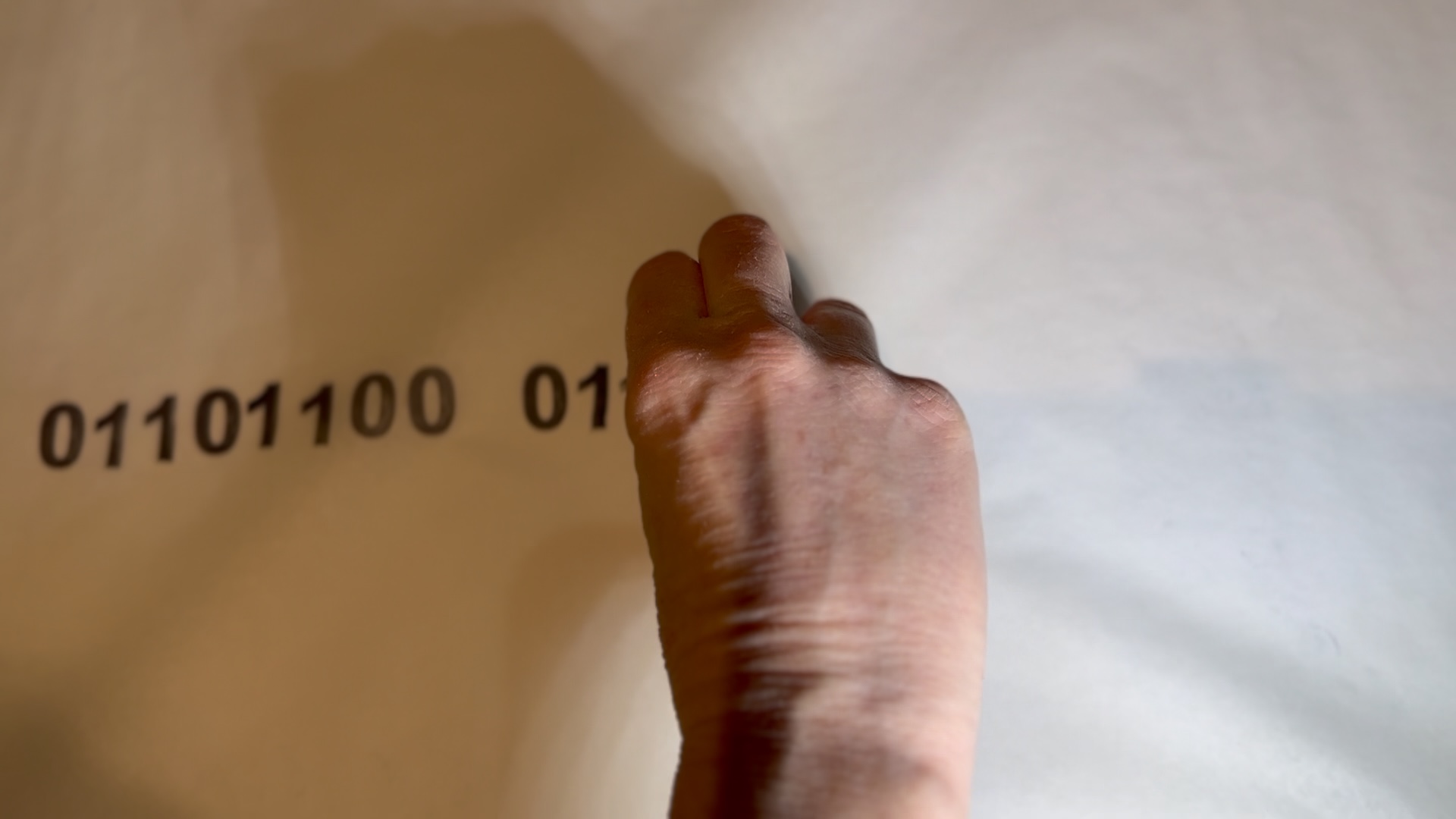
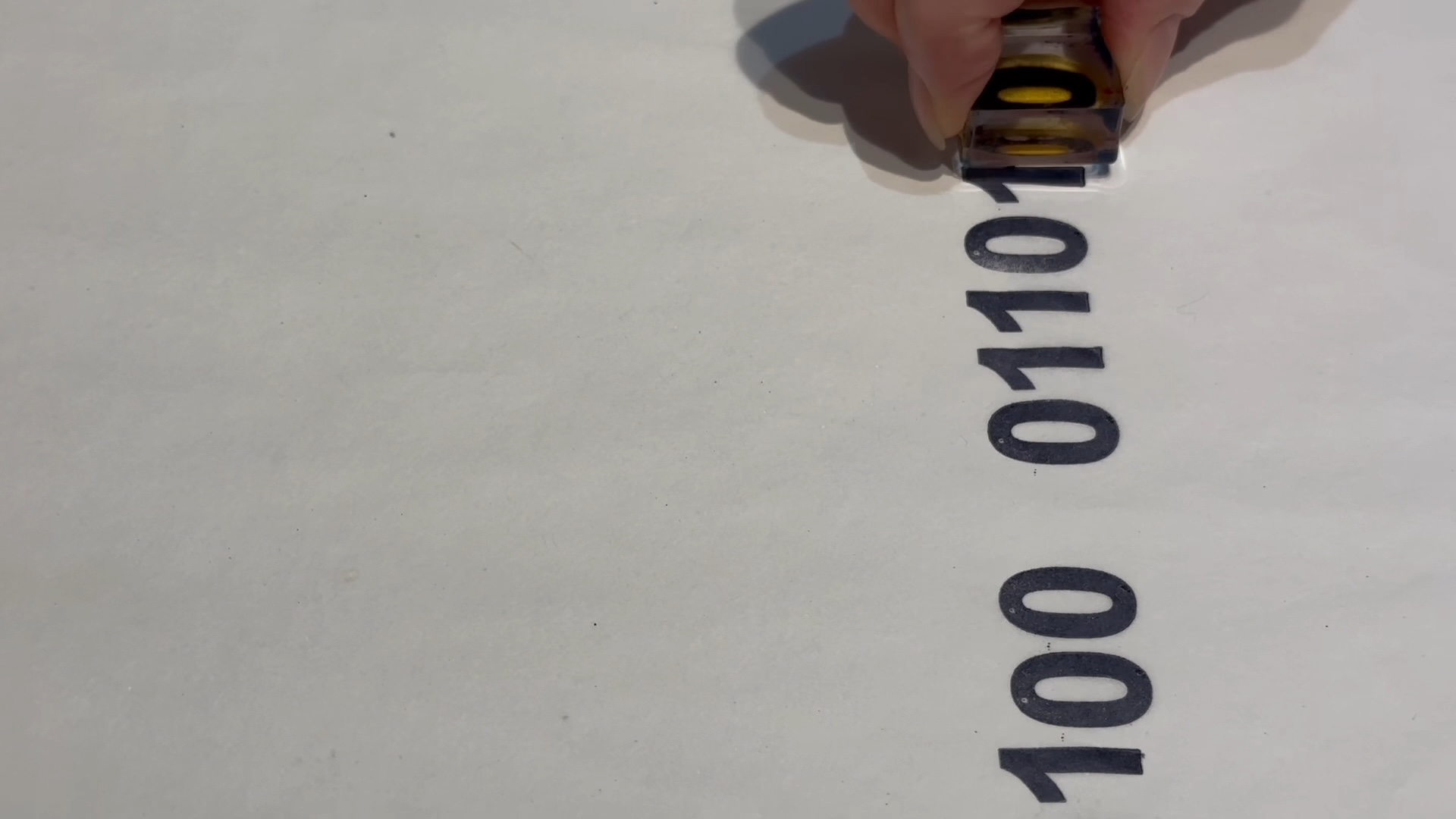
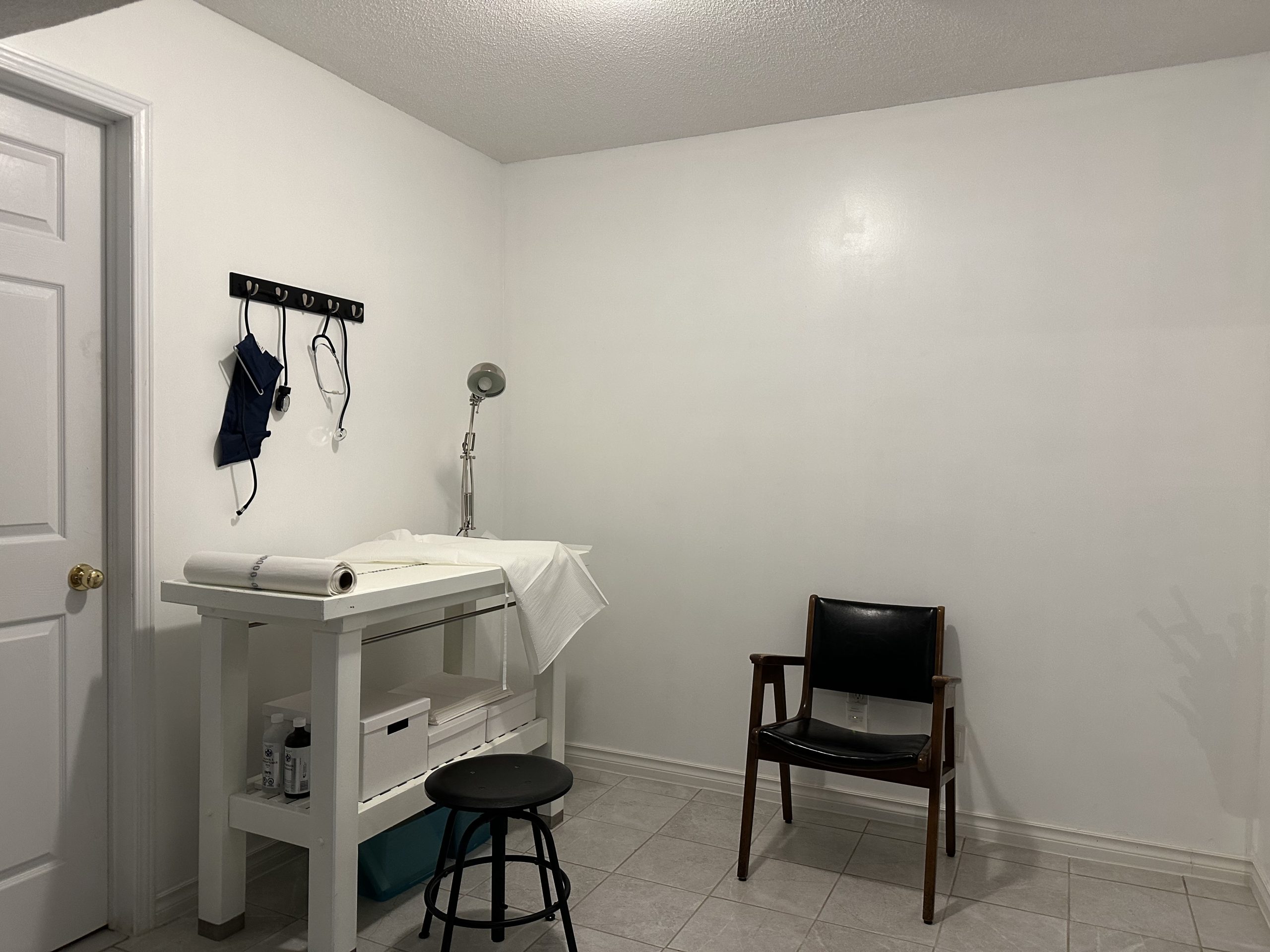
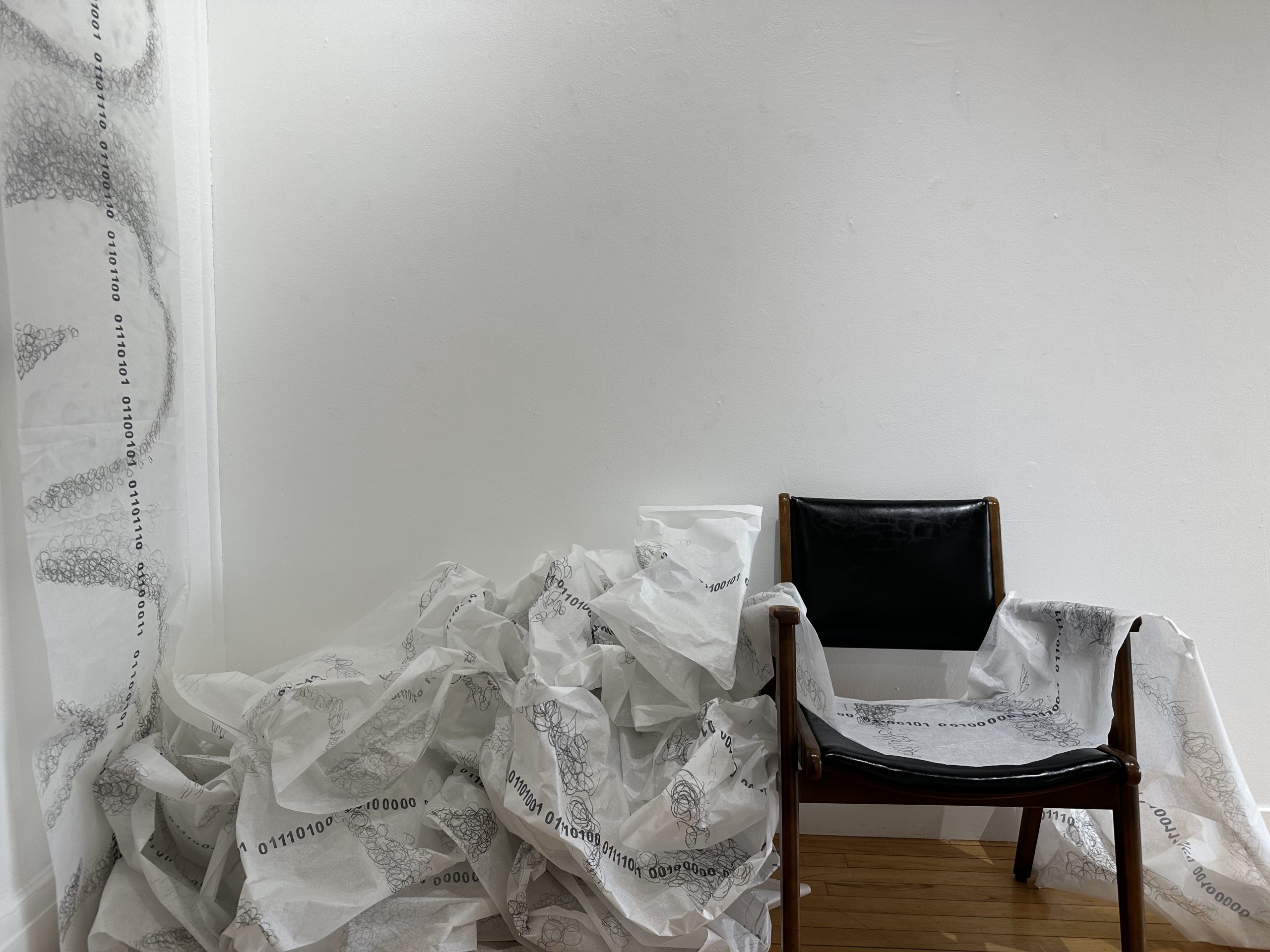

I approach waiting as a space of silence and anxiety, but also as a site of introspection and heightened awareness. Using medical paper commonly found in waiting rooms, I hand-stamp a passage translated into binary code—Emerson’s reflection on time, space, and the force of the soul.
The influence of the senses has, in most men, overpowered the mind to the degree that the walls of time and space have come to look real and insurmountable; and to speak with levity of these limits is, in the world, the sign of insanity. Yet, time and space are but inverse measures of the force of the soul.
—Ralph Waldo Emerson, The Oversoul
This encoded text introduces a layer of mediation, where language, technology, and embodiment intersect. The binary becomes both a barrier and a bridge: it obscures immediate comprehension while reinforcing the idea that perception itself is filtered, delayed, and conditioned by unseen systems.
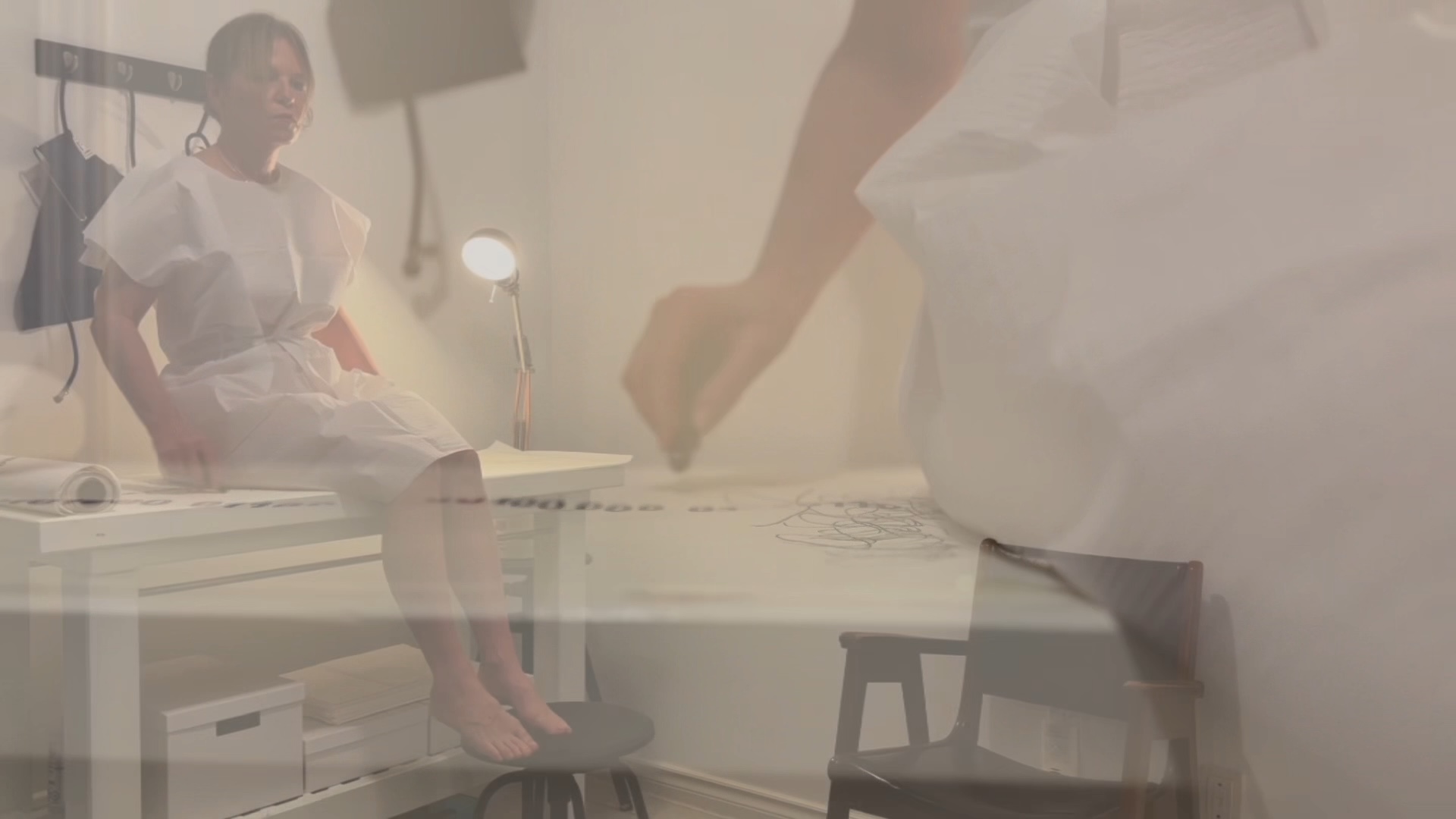
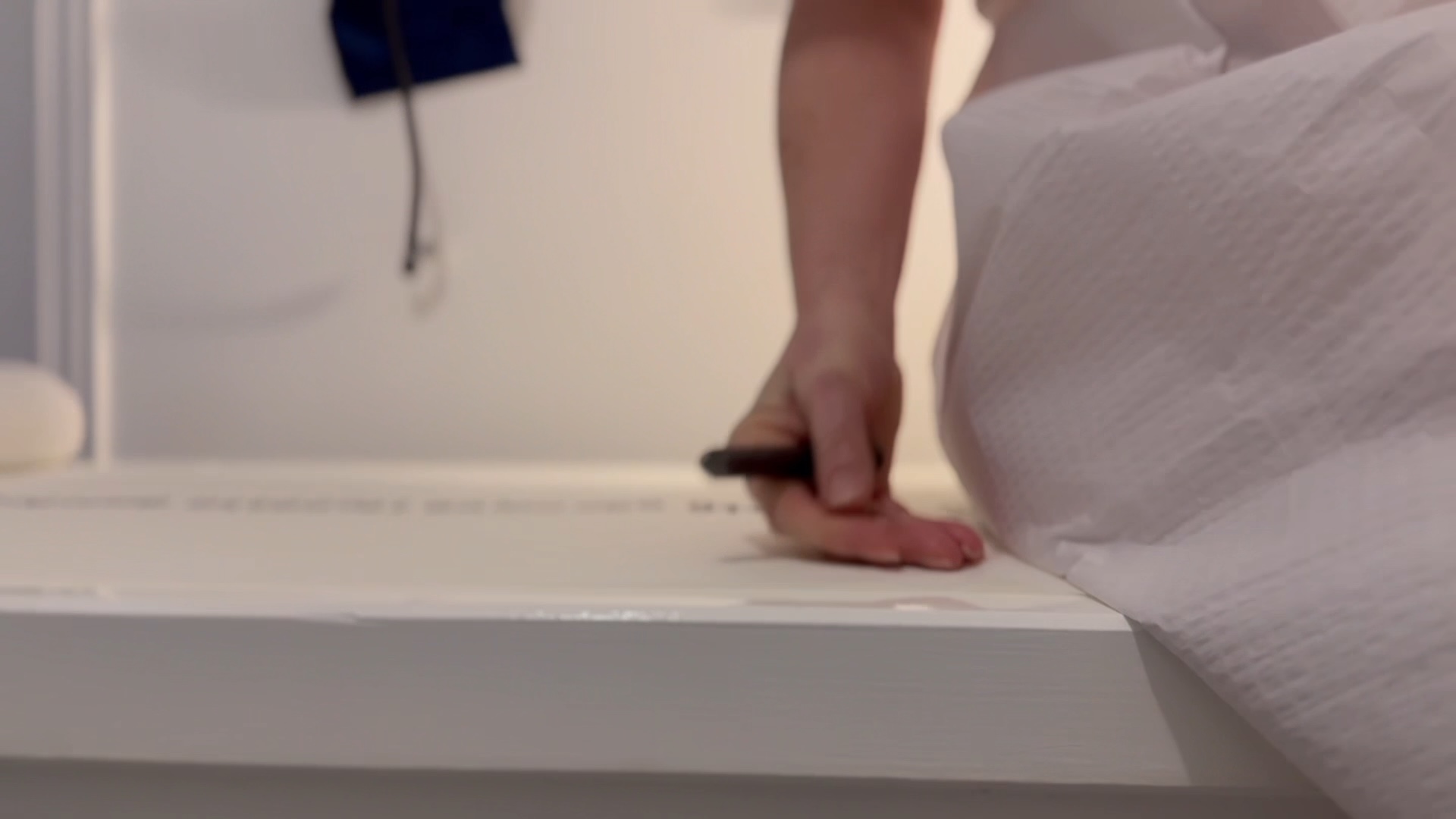
Wearing an examination gown, I enact a series of private performances within a simulated physician’s examination room. Through repetitive, circular, and synchronous motions around my body, I draw directly onto the stamped scroll, allowing duration and movement to accumulate as physical record. These gestures are intimate and vulnerable, shaped by the conditions of contemplation and exposure. The resulting scroll extends across time, its surface inscribed with the rhythms of waiting—each mark a measure of presence, each interval a reflection of the body’s negotiation with space, perception, and the unseen dimensions of experience.